

Surgical Implant Placement with Careful Planning
Dental implants replace missing teeth by placing a titanium post in the jawbone that serves as the foundation for a new tooth. Dr. Amber Hurley Johnson places implants as part of her oral and maxillofacial surgery practice and works with your restorative dentist, who makes the final crown, bridge, or prosthesis after healing.
Implant Cases Often Directed to Oral Surgery
- Sites requiring more extensive bone grafting or a sinus lift
- Implants near the nerve in the lower jaw or beneath the maxillary sinus
- Multiple implants or cases requiring more complex surgical planning
- Patients whose medical history calls for careful surgical and anesthesia planning
- Patients who prefer or require IV anesthesia for implant surgery
- Removal of a failed implant, particularly when the removal is expected to be difficult
Dr. Eleni Kanasi, our periodontist, also places implants, with particular attention to esthetics and the health and thickness of the gum tissue around the implant site and to patients with a history of gum disease.

Who May Be a Candidate?
Implant candidacy depends on more than having a missing tooth. Dr. Johnson evaluates the amount and quality of available bone, the health of your gums, your medical history, medications, tobacco use, oral hygiene, and the requirements of the planned final tooth.
Additional treatment may be recommended first when infection, gum disease, or inadequate bone could affect how predictably the implant will succeed.

Planning and Guided Placement
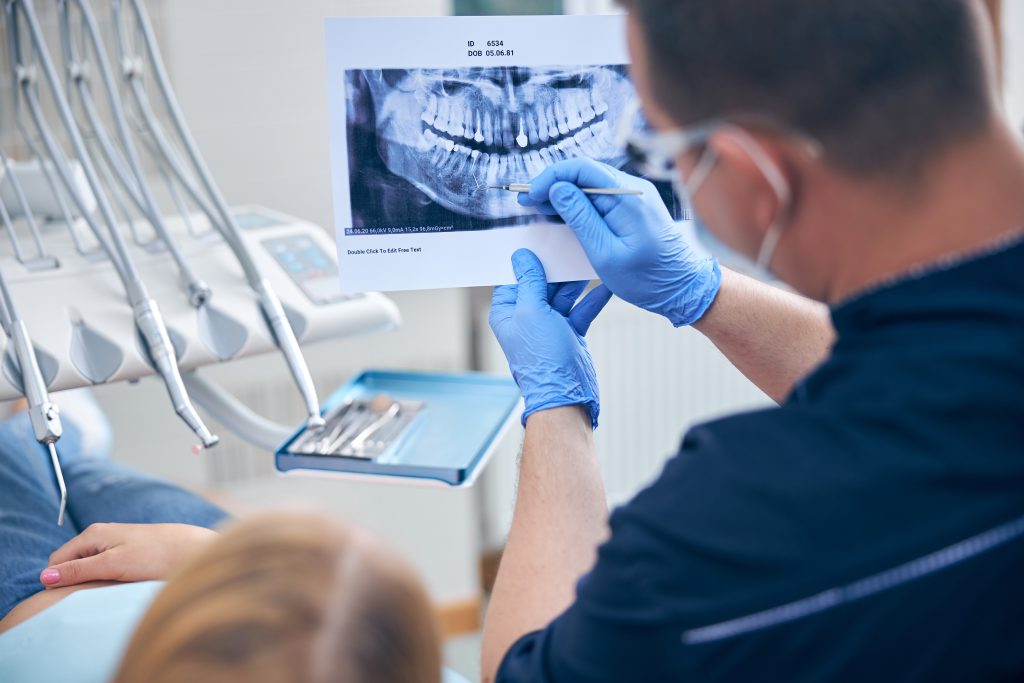
Planning may include dental X-rays, CBCT imaging, digital planning, and communication with your restorative dentist.
For most implant cases, Dr. Johnson uses a surgical guide created from the digital plan. The guide is a custom-made template that transfers the planned implant position and angle to the actual procedure, accounting for the available bone, the surrounding anatomy, and the planned final tooth.
Timing of Implant Placement
Timing depends on the condition of the tooth being replaced, the surrounding bone and gum tissue, whether infection is present, and the requirements of the final restoration.
In most cases, the extraction site is allowed to heal before the implant is placed. This gives the bone and gum tissue time to settle so the site can be re-evaluated and prepared, and it is the approach Dr. Johnson recommends for the majority of patients.
In selected cases, the initial treatment plan may include implant placement at the time of extraction. Whether that remains appropriate is confirmed after the tooth is removed and the site can be directly evaluated. Dr. Johnson will recommend the sequence that offers the most predictable approach for your individual situation.
Bone Grafting, Ridge Preservation, and Sinus Lifts
Some implant sites need bone grafting before or during implant placement. Ridge preservation may be performed when a tooth is removed, and an implant is planned later. In the upper back jaw, a sinus lift may be needed when more bone is required beneath the sinus.

Planning and Guided Placement
Planning may include dental X-rays, CBCT imaging, digital planning, and communication with your restorative dentist.
For most implant cases, Dr. Johnson uses a surgical guide created from the digital plan. The guide is a custom-made template that transfers the planned implant position and angle to the actual procedure, accounting for the available bone, the surrounding anatomy, and the planned final tooth.
Implant Placement and Healing
During surgery, the implant is positioned in the jawbone according to the planned position of the final tooth. A healing cap is typically placed at the same time. The implant then heals and bonds with the surrounding bone before the final tooth is made.
Completing the Final Tooth
After healing, your restorative dentist removes the healing cap and completes the final crown, bridge, or implant-supported restoration. Dr. Johnson coordinates the timing with that dentist.
Implant Treatment Timeline
The overall timeline varies. It depends on whether a tooth first needs to be removed, whether bone grafting is required, the condition of the surrounding tissues, the number and location of implants, healing, and the type of final restoration. Some plans involve several stages over a period of months. Dr. Johnson will review the expected sequence and timing before surgery.
Patients Missing Most or All of Their Teeth
Implants can also support a fixed or removable restoration for a patient missing most or all of the teeth in one jaw. Treatment of this kind is planned jointly with the restorative dentist and depends heavily on anatomy, bone volume, medical considerations, and the design of the final restoration.
Approaches vary considerably from one patient to the next, and an evaluation is the only reliable way to know what is possible in a given case.
When an Implant Cannot Be Kept
Most implants are successful, but an implant can occasionally become loose, fractured, or too compromised to keep. When removal is clearly indicated, Dr. Johnson can surgically remove the implant and evaluate the remaining bone.
Inflammation or bone loss around an implant does not always mean the implant must come out. Patients with suspected peri-implantitis may be evaluated by Dr. Kanasi to determine whether the implant can be saved.
Long-Term Care
Implants require ongoing professional maintenance and good home care. Gum health, oral hygiene, tobacco use, bite forces, medical conditions, and restorative factors all influence how an implant does over time. No dental implant can be guaranteed to last for life.