
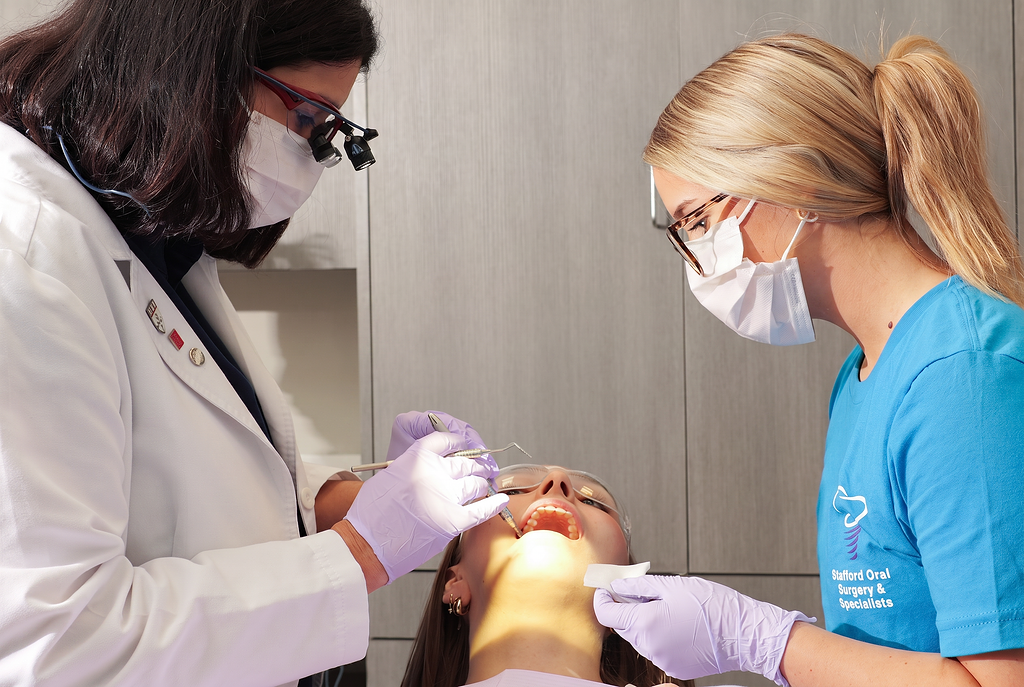
Preparing and Rebuilding Bone for Implant Treatment
The jawbone changes shape after a tooth is removed. Bone grafting can help preserve an extraction site or rebuild an area so that a dental implant can be placed.
Dr. Amber Hurley Johnson performs ridge preservation, selected bone grafting, and sinus lift surgery as part of her oral and maxillofacial surgery practice.
Ridge Preservation After Extraction
Ridge preservation is a bone graft placed at the time a tooth is removed. Graft material is placed into the socket to help limit the change in the shape and volume of the bone as the site heals.
Ridge preservation does not prevent all bone loss and does not guarantee that no additional grafting will ever be needed. Its purpose is to support the site during healing and improve the foundation for future treatment.

When Bone Grafting May Be Recommended
- A tooth is being removed and implant treatment is planned for later
- Bone loss is already present around a tooth or extraction site
- The available bone is not enough for the planned implant
- Additional bone is needed beneath the sinus in the upper back jaw

Sinus Lift Surgery
The maxillary sinuses are air spaces above the upper back teeth. After tooth loss, the amount of bone between the mouth and the sinus can become limited, leaving too little room for an implant.
A sinus lift creates space beneath the sinus membrane so graft material can be placed and new bone can develop. Dr. Johnson performs sinus lift surgery through a small opening in the side of the upper jaw, which allows a larger volume of bone to be developed than smaller techniques permit.
A sinus lift may be performed before implant placement or, in selected cases, at the same time. The recommended timing depends on how much bone is already present and how well an implant can be stabilized.
Dr. Kanasi performs internal, or crestal, sinus elevation, a smaller procedure done through the implant site itself when the existing bone height is more favorable.
Imaging and Planning
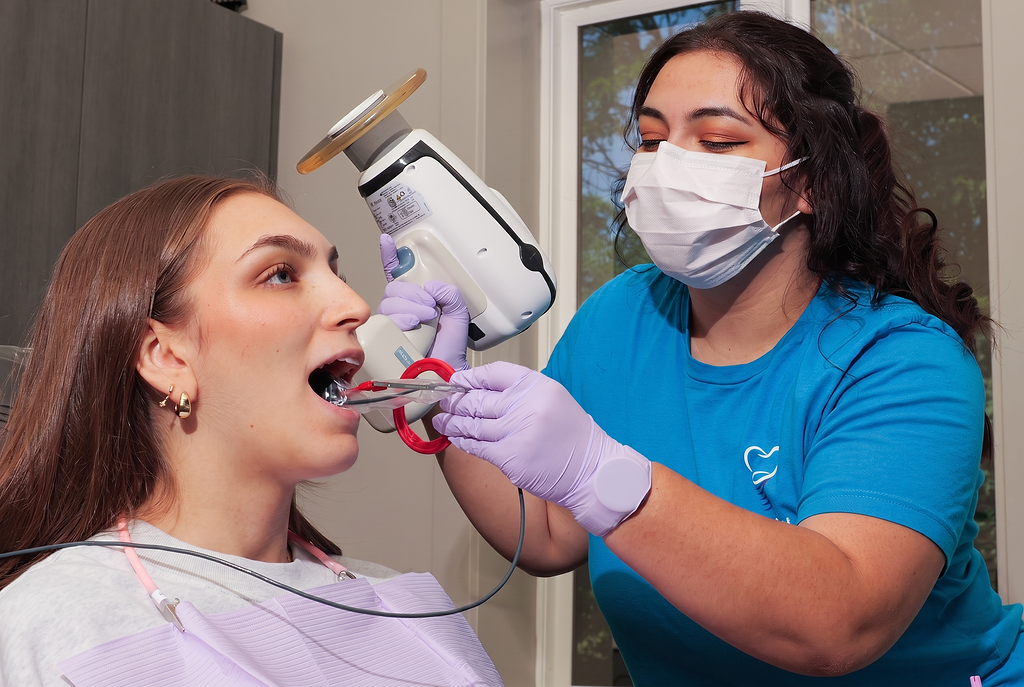
Dental X-rays and CBCT imaging may be used to evaluate the amount of available bone, the shape of the ridge, the sinus anatomy, and nearby structures. Three-dimensional imaging is recommended when it provides meaningful information for surgical planning.
What Graft Materials Are Used?
Bone grafting may use processed donor bone or graft material of animal origin, depending on the procedure and the needs of the site. The graft acts as a framework that supports the formation of new bone during healing. Dr. Johnson will explain which material is planned before surgery, and you are welcome to ask questions about it.
Healing After Bone Grafting
Bone grafts need time to heal and mature. The healing period varies with the size and location of the graft, the procedure performed, the condition of the site, and individual healing. Patients who have had sinus surgery also receive specific sinus precautions during recovery.
Potential Risks
Potential risks include pain, swelling, bleeding, infection, delayed healing, loss or partial loss of the graft material, the need for additional treatment, and procedure-specific complications such as a tear in the sinus membrane or sinus symptoms. The risks relevant to your procedure are reviewed before treatment.
Schedule an Appointment
If you are having teeth removed that you want to replace with a dental implant, consult our oral surgical experts before your procedure. It is simpler and less invasive to have a ridge augmentation done at the same time as your extraction if it is needed. We can also help if you need a sinus elevation for upper molar dental implants. Contact our office to schedule your consultation.