
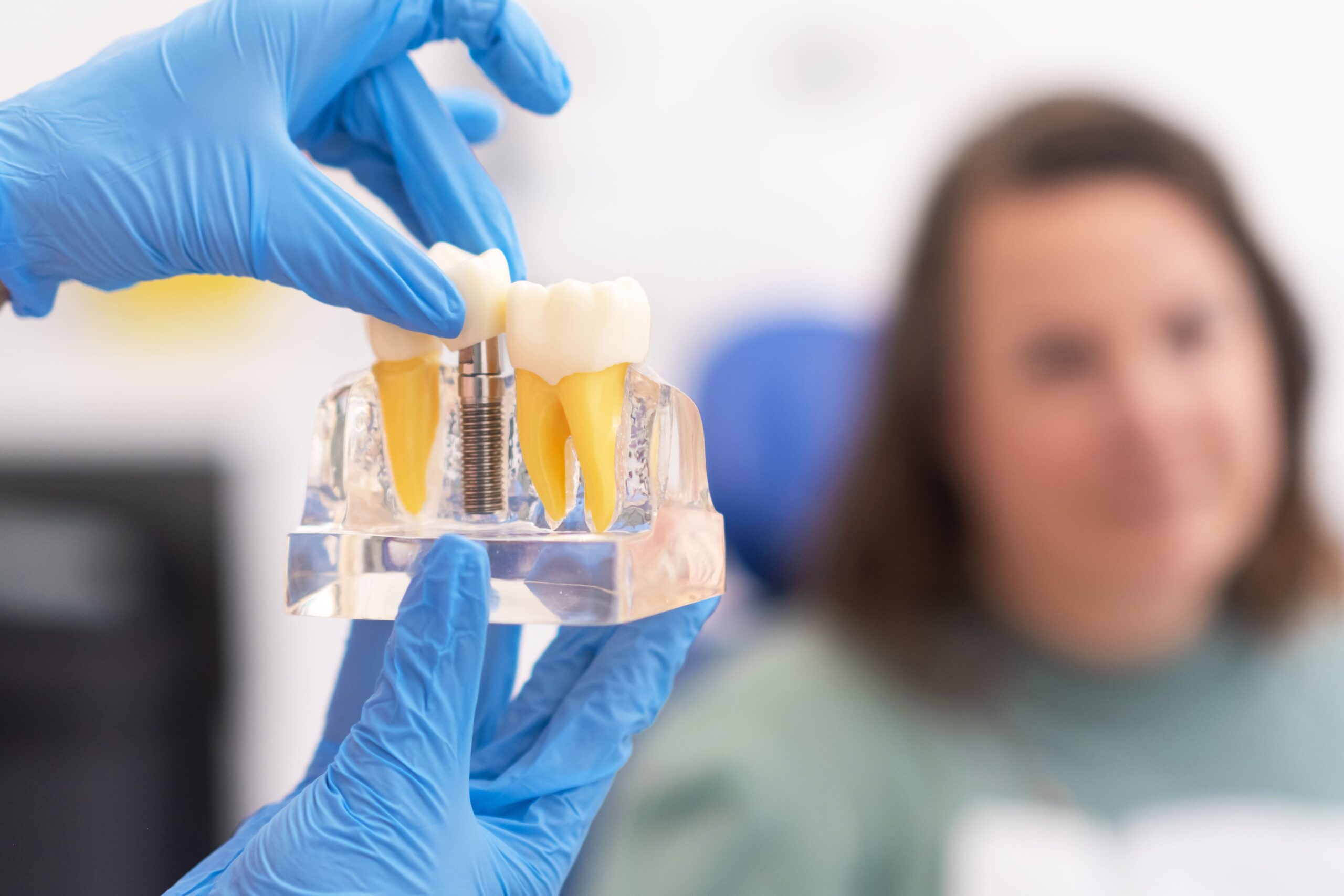
Implant Placement with Attention to the Gum and Bone Around It
A dental implant is only as healthy as the tissue that surrounds it. As a periodontist, Dr. Eleni Kanasi approaches implant treatment with particular attention to the health, thickness, and shape of the gum tissue and supporting bone at the implant site — the factors that determine whether an implant stays healthy over years, not just whether it can be placed today.
Implant Cases Often Directed to Periodontics
- Patients with a history of gum disease, who are at higher risk for problems around an implant
- Sites where the gum tissue is thin, or where there is not enough firm, attached tissue
- Implant sites in the front of the mouth, where the gumline is visible when you smile
- Patients who need gum disease treated and stabilized before an implant is placed
- Soft-tissue grafting before, during, or after implant placement
- Patients who already have an implant with inflammation or bone loss around it
Dr. Amber Hurley Johnson, our oral and maxillofacial surgeon, also places implants, with particular attention to surgically complex sites, extensive bone grafting, sinus lift surgery, and patients who need IV anesthesia.
Gum Health Before Implant Treatment
Active gum disease and ongoing inflammation affect the tissues around natural teeth and can also influence the health of an implant. Placing an implant into an environment where disease is still active puts that implant at risk from the start.
When periodontal treatment is needed, Dr. Kanasi may recommend stabilizing your gum health before, or as part of, implant treatment.
Planning an Implant
Implant planning considers more than whether there is room for an implant. Dr. Kanasi evaluates the condition of the surrounding gum tissue, the bone volume, the tissue thickness, how easily you will be able to clean around the implant, your medical risk factors, and the position of the planned final tooth.
She coordinates closely with your restorative dentist so that the surgical placement and the final crown or prosthesis are planned together.
Guided Implant Placement
For most implant cases, Dr. Kanasi uses a surgical guide created from digital treatment planning. The guide is a custom-made template that transfers the planned implant position and angle to the actual procedure, accounting for the available bone, the soft tissue, the surrounding anatomy, and the planned final tooth.
Soft Tissue Around the Implant
When the tissue around an implant is thin, or when there is not enough firm, attached gum tissue, soft-tissue grafting may be recommended. Improving the tissue environment supports hygiene, comfort, appearance, and long-term maintenance of the implant. This is one of the areas where a periodontist’s training is most directly relevant to implant treatment.
Patients Missing Most or All of Their Teeth
Dr. Kanasi also provides implant treatment for selected patients who are missing most or all of the teeth in one jaw. These cases are planned closely with the restorative dentist and may involve multiple implants supporting a fixed or removable restoration. Her periodontal approach places particular emphasis on gum health, tissue thickness, supporting bone, the ability to clean around the final restoration, and long-term maintenance. The specific approach depends on the anatomy, periodontal health, restorative goals, and the overall treatment plan.
After Implant Placement
Once the implant has healed and is ready to be restored, your restorative dentist completes the final crown or prosthesis. Long-term professional maintenance and effective home care matter, because implants can develop inflammatory disease in the surrounding tissues just as natural teeth can develop gum disease. Dr. Kanasi will discuss a maintenance schedule appropriate for your risk level.
Schedule an Implant Evaluation
If you are missing a tooth, have been referred for implant placement, or have a history of gum disease and want your implant planned with that in mind, Dr. Kanasi can evaluate the gum tissue, the available bone, and the restorative requirements.