
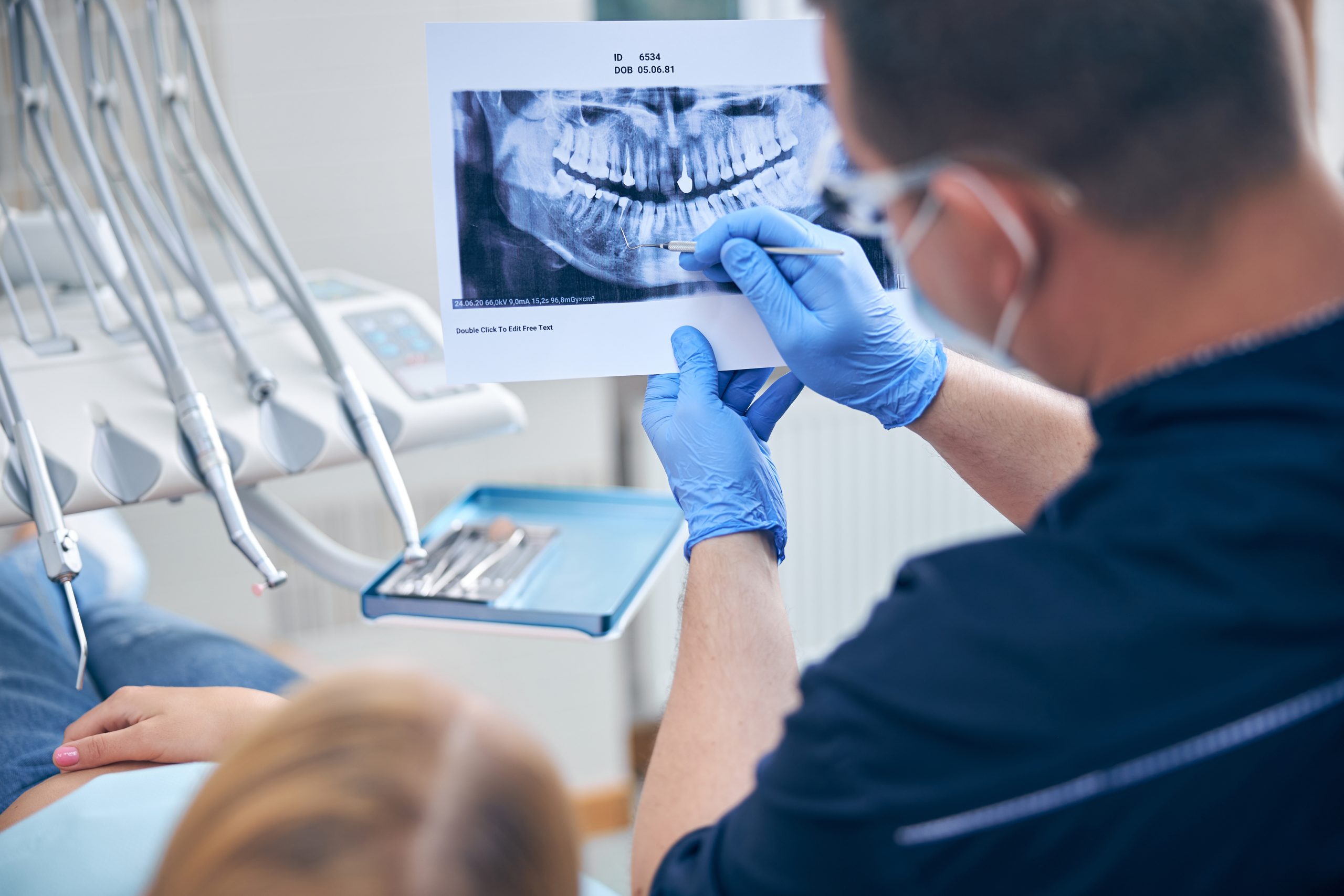
Surgical Treatment to Preserve a Tooth
Most endodontic conditions can be treated through the inside of the tooth with root canal treatment or retreatment.
In selected cases, however, disease persists around the end of a root, or the problem cannot be predictably addressed through the root canal system alone.
Endodontic surgery provides another way to treat the affected area while working to keep the natural tooth.
Dr. Ashraf Eid performs endodontic surgery on both front and back teeth.
What Is an Apicoectomy?
An apicoectomy, also called root-end surgery, is the most common form of endodontic surgery.
Rather than approaching the problem through the crown of the tooth, Dr. Eid reaches the root through the gum tissue and the surrounding bone.
The affected tissue near the end of the root is treated, a small portion of the root tip is removed, and the root end is inspected and sealed.
Why Might Endodontic Surgery Be Recommended?
Endodontic surgery may be considered when:
- Infection or inflammation persists around the root after previous root canal treatment
- Nonsurgical retreatment is unlikely to solve the problem
- The anatomy prevents predictable treatment through the inside of the tooth
- A problem at the root end needs direct inspection or treatment
- More information is needed about a persistent problem involving the root or surrounding tissues
The choice between retreatment and surgery depends on the individual tooth and on why the previous treatment has not resolved the problem.

Evaluation and CBCT Imaging
Careful planning is particularly important before endodontic surgery.
Dr. Eid reviews the tooth, the previous endodontic treatment, the existing restorations, the
gum and bone support, and the surrounding anatomy before recommending surgery.
Three-dimensional CBCT imaging may be recommended to evaluate the roots and
surrounding bone and to identify nearby structures such as nerves and sinuses. This
information helps determine whether surgery is a good option and assists with planning.
What to Expect from an Apicoectomy
Microsurgical Treatment
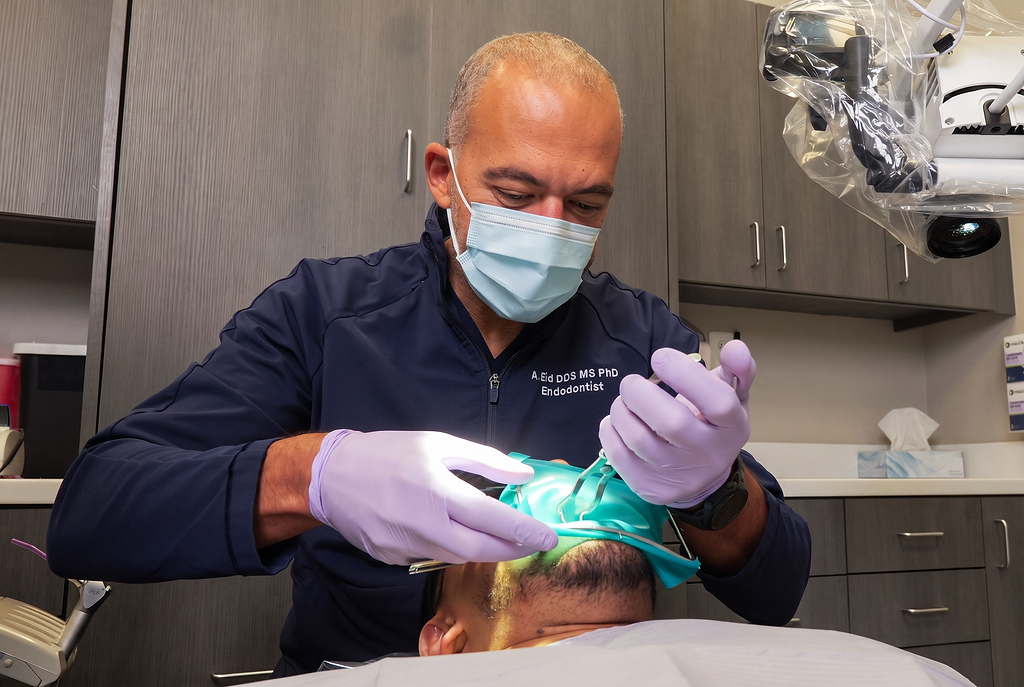
Dr. Eid uses a dental operating microscope for endodontic surgical procedures. Magnification and lighting allow detailed examination of the root surface and root end and support precise work in the surgical area.
What Happens During the Procedure?
The area is thoroughly numbed with local anesthesia. Dr. Eid makes a small surgical opening through the gum tissue to reach the affected root and the surrounding bone. Inflamed or infected tissue is removed, and the root end is inspected. A small portion of the root tip may be removed, and the end of the root canal may be prepared and sealed. The surgical site is then closed with sutures. The exact procedure varies depending on the tooth and the diagnosis.
Front and Back Teeth
Dr. Eid performs apicoectomies on both front and back teeth when the anatomy and the clinical situation make surgical treatment appropriate. Back teeth can have more complex root anatomy and may sit near important structures, which makes careful imaging and planning especially important.
Recovery
Some swelling, soreness, bruising, or tenderness can occur after endodontic surgery. Instructions will cover oral hygiene, diet, medications, and activity during healing. Sutures may need to be removed or checked at a follow-up appointment depending on the type used.

Comfort Options
Endodontic surgery is performed with local anesthesia.
Nitrous oxide or oral sedation may also be available for selected patients. If IV sedation is needed, care may be coordinated with a qualified anesthesia provider.
Frequently Asked Questions
No. Depending on the cause of the problem, nonsurgical retreatment may be the better choice.
In other situations, surgery provides more direct access to the area of concern. If the tooth has a poor restorative or gum-support outlook, or a fracture that prevents predictable preservation, further endodontic treatment may not be recommended.
Dr. Eid will review the alternatives before proceeding.
No. Root canal treatment and retreatment reach the root canal system through the tooth. An apicoectomy reaches the end of the root surgically, through the surrounding gum and bone.
If the tooth is otherwise sound, endodontic surgery may offer a way to treat the persistent disease while keeping the natural tooth.
Extraction may be the better choice when the tooth cannot be predictably restored or maintained.
Not necessarily.
Because an apicoectomy reaches the root surgically rather than reopening the tooth through the crown, an existing crown can often stay in place.
The restorative needs of the tooth depend on its individual condition and will be coordinated with your general or restorative dentist when necessary.
Improvement in your symptoms matters, but the bone around the root heals gradually over time. Dr. Eid may recommend follow-up examinations and imaging to monitor healing.
Schedule an Endodontic Evaluation
If a previously treated tooth has a persistent infection or symptoms, or you have been referred for an apicoectomy, contact Stafford Oral Surgery & Specialists for an evaluation with Dr. Eid.